
Thermography
Save by analysing sources of heat loss, water leaks, leaking roofs, condensation and mould.
Thermographic surveys assess:
- cold buildings and rooms from basement to attic;
- causes of heat loss;
- causes of draughts and air infiltration or escape;
- insulation performance;
- the location of underfloor heating and water pipes and any leaks;
- causes of moisture and water ingress;
- existing and potential causes of mould;
- efficiency problems in cold stores;
- leaking roof structures.
Thermography is carried out inside and outside the building using the latest-generation infrared equipment and various other measuring instruments.
For greater accuracy and efficiency, we use additional instruments to measure and determine:
- surface t°C;
- outdoor wind speed;
- actual and relative surface moisture;
- indoor air humidity;
- indoor and outdoor air t°C;
- deviations from normal values.

Building thermography services
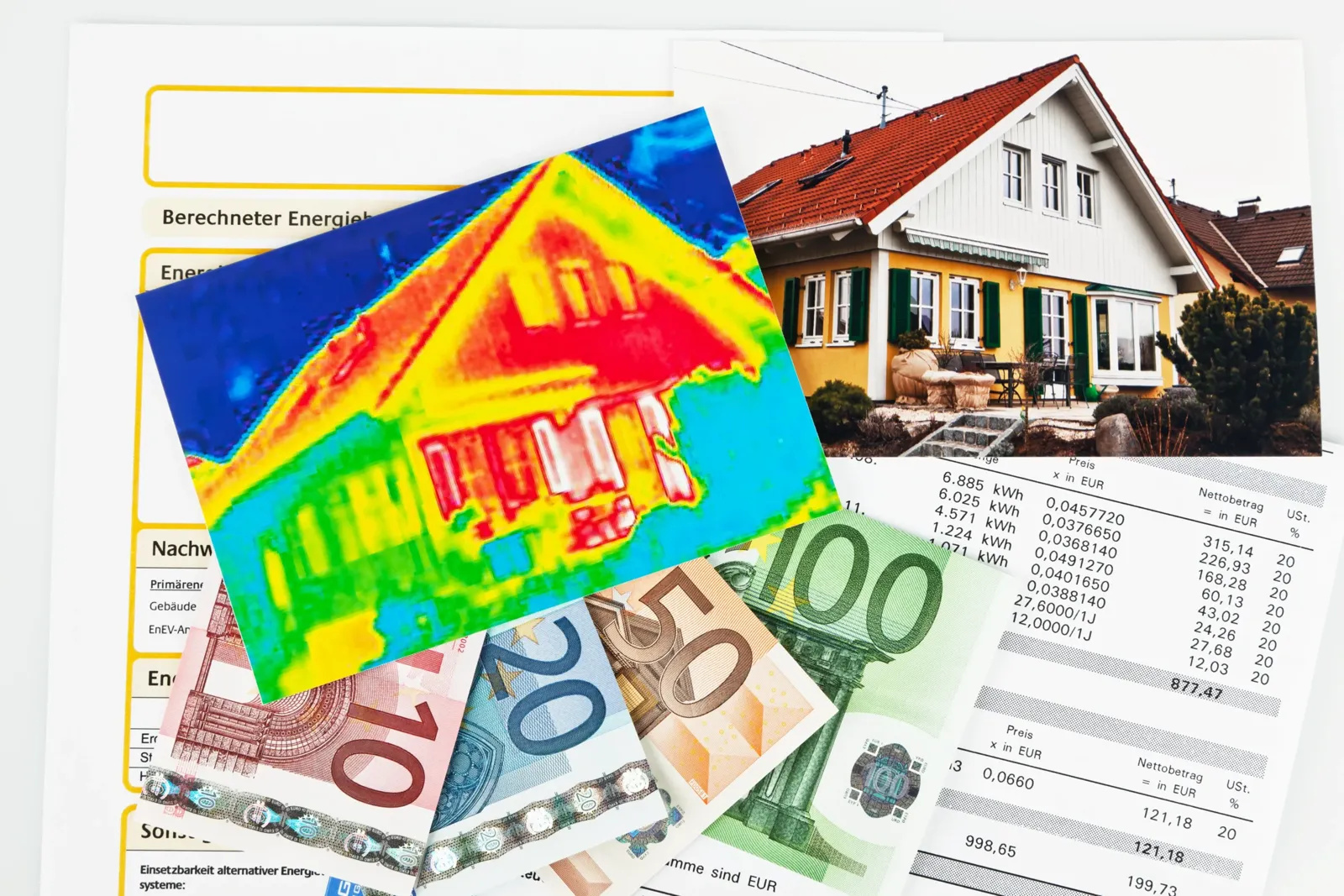
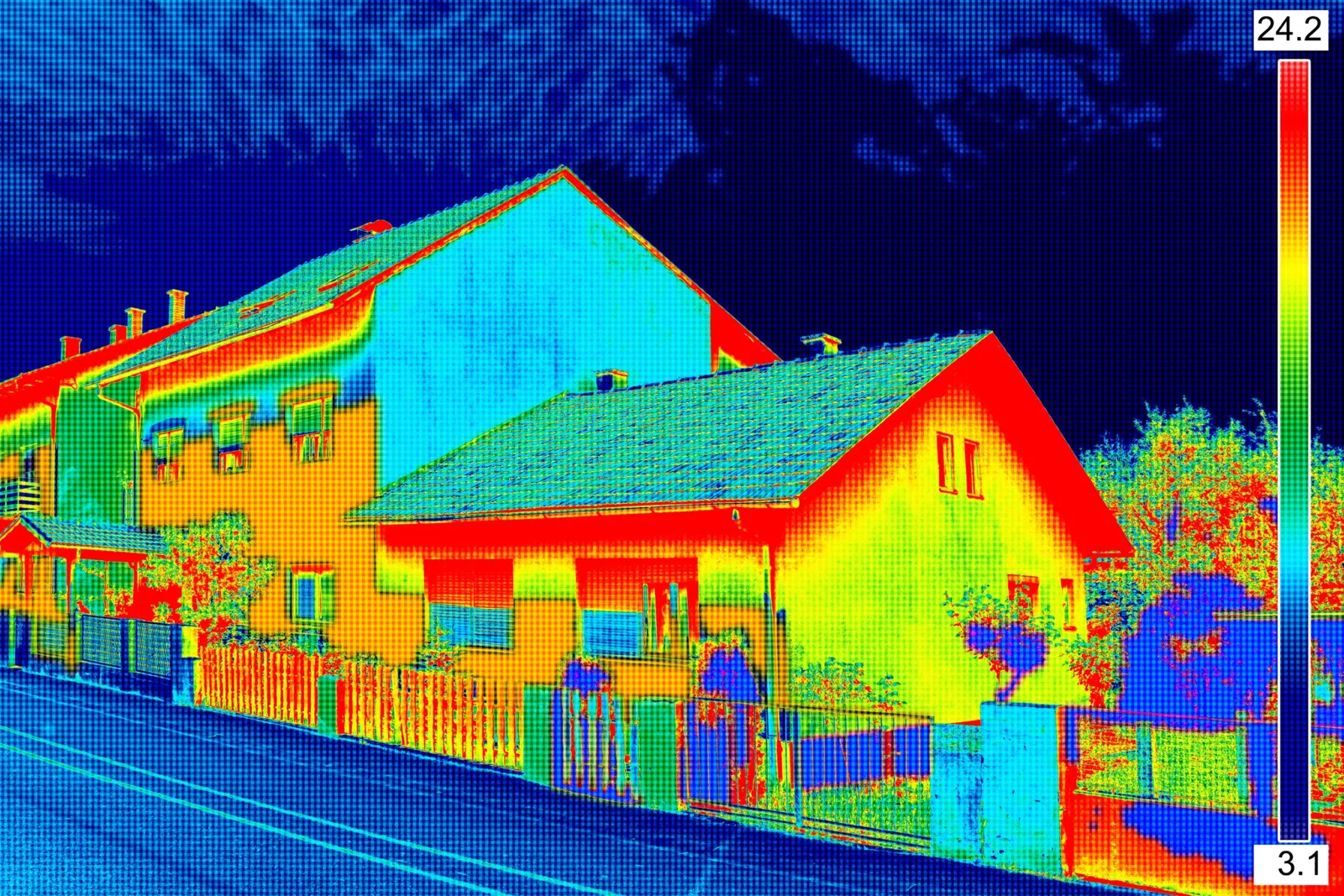
Building thermographic surveys identify why rooms, parts of a house or the entire house are cold. A poorly sealed home is a cold home. Heat loss means higher heating bills and a shorter building lifespan. Resolving insulation problems can reduce heating costs and save money.
We specialise in residential thermographic surveys. Our certified specialists have undergone extensive, long-term training and gained substantial experience. They inspect the building inside and out to identify every insulation problem in the property.
Our professional, experienced team has carried out thermographic surveys of many buildings nationwide. We have worked in all kinds of properties: private and commercial buildings, flats, apartment blocks, exhibition halls, other public buildings and other structures. Whatever the building type, insulation problems always cause losses, so identifying and correcting them is the most effective way to reduce heating bills.
We use only the highest-resolution thermographic equipment to detect heat loss and other anomalies and establish why these defects have occurred.
Residential thermographic surveys are carried out to:
- determine why buildings and rooms are cold;
- identify causes of heat loss;
- locate draughts and air infiltration or escape;
- assess insulation performance;
- identify thermal bridges;
- assess windows and frames;
- check for air entering around switches and sockets;
- establish causes of moisture and water ingress.
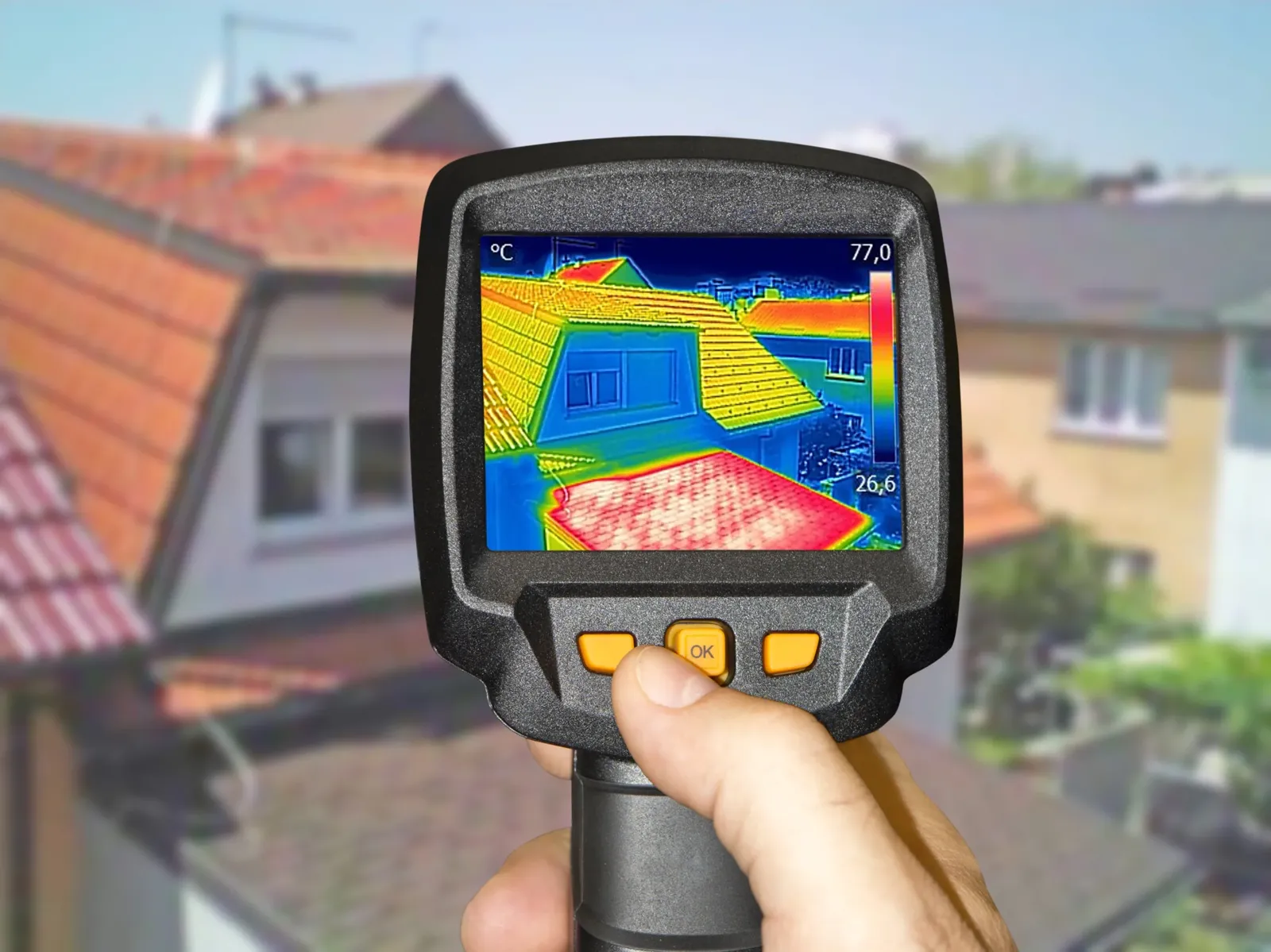
We conduct surveys by walking through the premises with handheld thermographic equipment. This means the normal daily life of your home or property is not significantly disrupted.
The inspection is entirely non-invasive and safe, causing no mechanical or physical damage to the building.
We normally survey when there is no direct sunlight: early in the morning, later in the evening or under overcast skies. This avoids solar heating. There must be at least an 18°C temperature difference between indoors and outdoors, with the outdoor temperature no higher than +5°C. These conditions ensure the most accurate results, giving you valuable information and the opportunity to address heat loss and other insulation problems effectively and reduce heating bills.
Insulation assessment for freezers, refrigerators and cold rooms
Thermographic surveys of freezer insulation form part of regular inspections, with one of the main aims being to save electricity in freezers or refrigerators. Our specialists have extensive experience surveying cooling losses in cold stores and freezers, identifying insulation defects, water entering insulation and warm-air entry points.
Thermography of freezer insulation and refrigeration systems identifies problems in walls, ceilings or roofing. Our experienced specialists inspect your freezer's insulation and record images of every defect found. The information enables precise, effective repairs, so electricity savings make a real difference to your costs.
Thermographic checks of freezer cooling losses and insulation are best carried out after the freezer has operated for at least 24 hours.
For these surveys, we use only high-resolution thermographic equipment, as lower-specification devices may fail to reveal thermal defects. Combined with our knowledge and experience, this makes us one of Latvia's leading companies for thermographic surveys of freezer insulation.
Freezer insulation thermography is used to:
- determine the causes of ice or frost on walls and ceilings;
- identify air entering the store;
- locate heat sources inside;
- establish why energy consumption is excessive when the freezer operates at its set values;
- assess a new store's insulation and its suitability for the intended purpose.
You receive the results within 4 working days of the survey's completion. The specialist walks through the site using handheld thermographic equipment, so normal warehouse operations are unaffected and uninterrupted.
Saving freezer electricity not only reduces your costs but also benefits the environment. Contact us: our experienced, professional and specially trained specialists can assess whether defects are preventing your freezer from operating efficiently.
Thermal water leak detection services
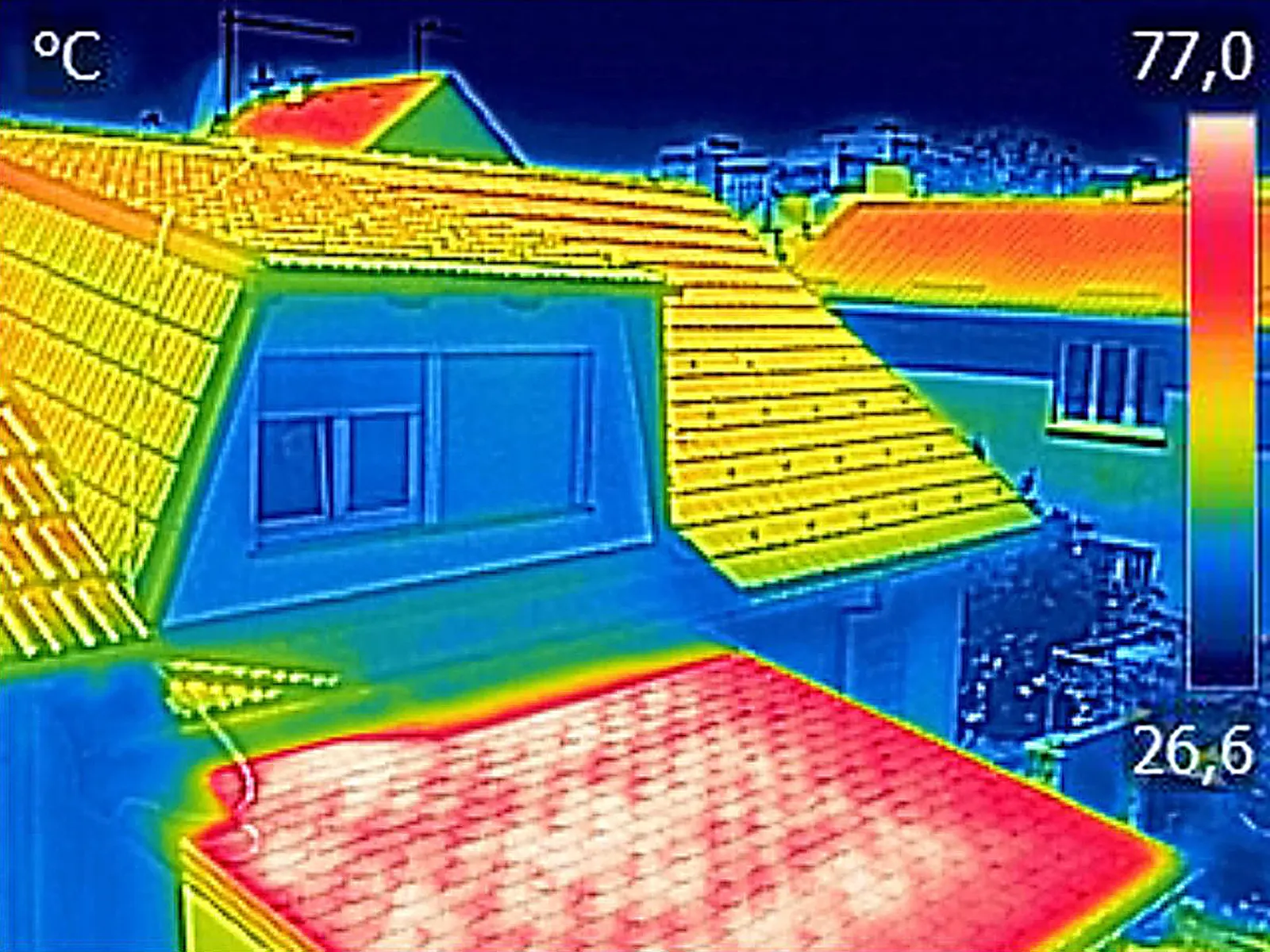
Using high-resolution thermographic equipment and additional inspection systems, we detect and locate water leaks, water ingress and flood damage in buildings.
Our certified specialists have undergone extensive, in-depth training and have substantial experience locating moisture sources and water leaks throughout buildings, including floors, walls and roofing systems.
We offer a comprehensive range of thermographic services for locating water leaks and moisture sources. We survey properties throughout Latvia and have extensive experience in this specialist work.
Thermography is highly effective. It pinpoints water leaks or ingress in buildings so defects can be addressed and the building protected. Leaking underfloor heating, mould and other problems seriously damage buildings and significantly shorten their lifespan. A burst underfloor heating pipe can cause damage requiring substantial expenditure in a relatively short time.
The most common types of water leaks or ingress are:
- pipe leaks, including burst underfloor heating pipes;
- leaks in underfloor heating systems;
- gutter leaks;
- defects in foundation waterproofing;
- condensation;
- ground moisture absorbed into walls;
- leaks in roofing systems;
- rainwater entering the building.
Our experienced team can help assess moisture damage and map water entry points. Contact us even if mould is the only problem you have noticed. Using thermography, we help establish its cause and precisely identify all moisture and water-leak defects in your property.
Our specialists handle everything: they not only answer your questions but also accurately identify the source of water entering the building.
We use different approaches and methods depending on the problem. Detailed information and photographs help us choose the most effective way to locate a water leak in your building.
To identify the exact cause of a leak or water ingress, certain areas of the building may need to be heated or cooled. We advise you on the necessary preparations before the survey.
Building surfaces are not damaged during the survey. Our certified specialists use additional equipment, such as moisture meters and adaptable camera systems, to check and confirm findings.
We can also locate and map pipes in floors and walls and assess underfloor heating performance to check for leaks caused by a burst underfloor heating pipe.
Make a booking or ask a question
To receive an approximate quote or make a booking, complete the enquiry form. Please describe the service in as much detail as possible. We may ask for photos or visit to assess the work required.
Customer reviews
“Iesaku.”
“Paldies ka pateicāt, ka siltinājumam viss labi.”
“Atradām, kur nebija sapūsta ekovate, tapēc arī viena istaba bija auksta, tagad darbs būs tiem kas veica siltināsānas pakalpojumu. Edgars”